Sales are increasing, so why aren't profits? It's a question everyone who works in the restaurant industry hears. The answer is often not in sales, but in costs. Most restaurants price a dish based solely on the cost of the meat and rice, forgetting about everything else.
- The cost of the dish is calculated from the recipe card in grams and at the price of the last supplier invoice.
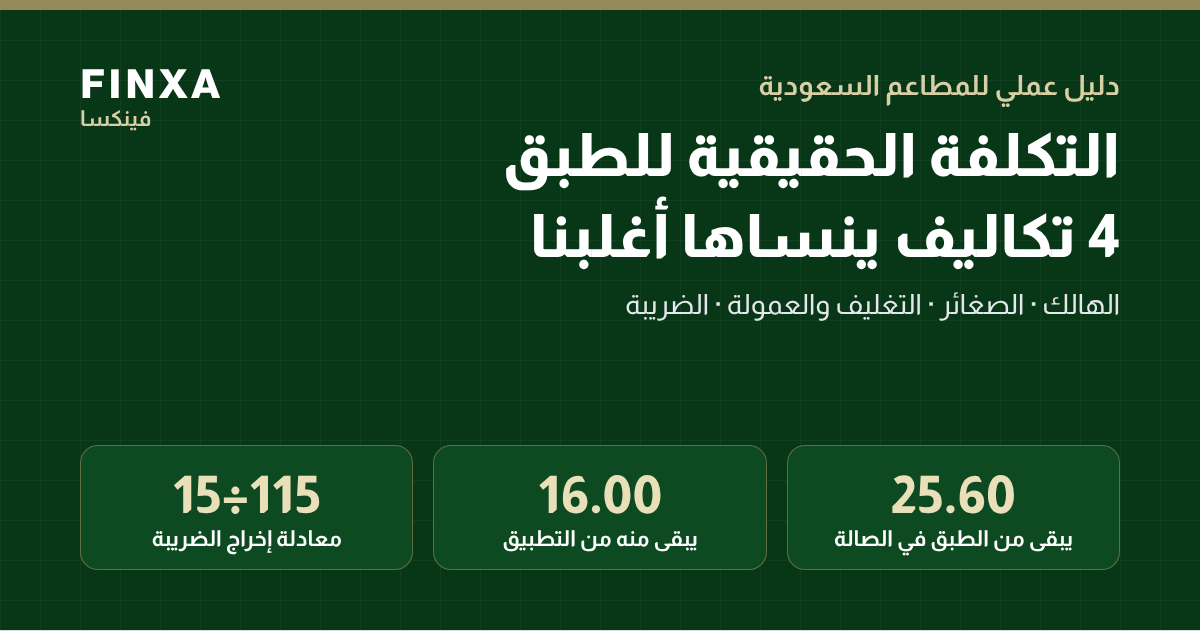
- 4 costs that are often forgotten: loss, minor charges, packaging and commission, payment fees and tax.
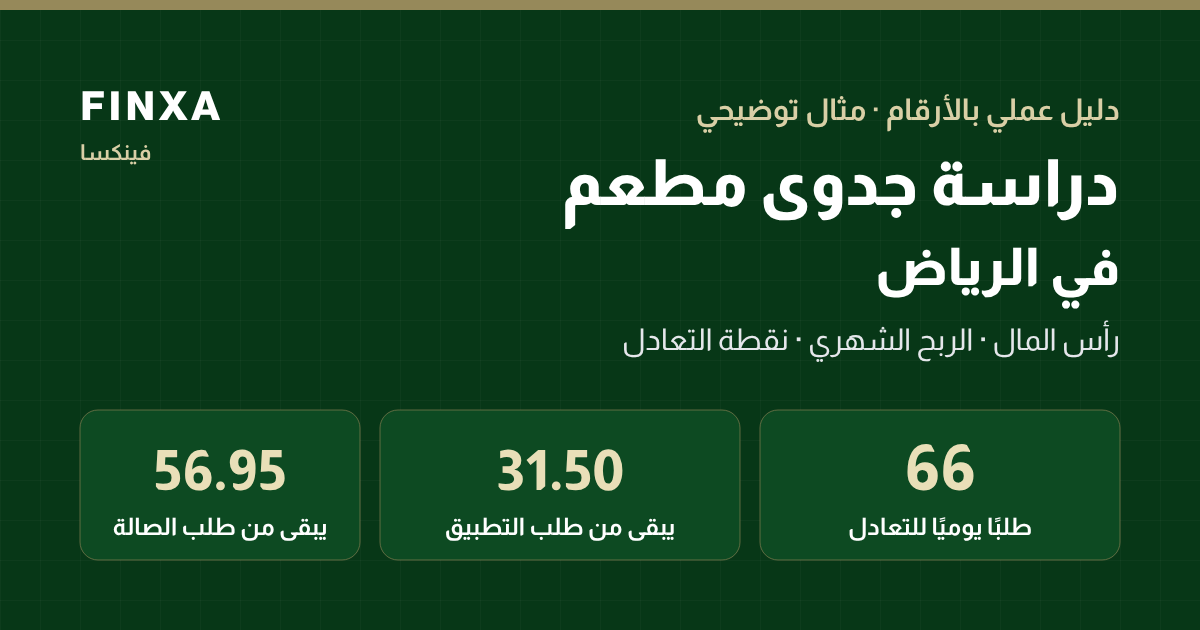
- In the experimental example, the remaining balance from the dish is 25.60 riyals in the hall and 16.00 riyals from the application.
What is the cost of the dish?
The cost per dish is everything you pay to get that meal to the customer, divided by the number of dishes. It is calculated from the «recipe card» for each item: ingredients in grams, and the price of each ingredient from the last supplier invoice.
4 costs that most restaurant owners forget
- The deceased and the lost: One kilogram of raw meat does not equal one kilogram of cooked meat. Calculate the cost based on the net weight after cleaning and cooking, not the purchase weight.
- Minor matters: Oil, spices, sauces, free bread, and napkins. Each one is a small part, but together they are an important part of the dish.
- Packaging and delivery: The box and bag, plus the delivery app's commission as per your contract with them. The dish itself has two costs: one at the restaurant and one through the app.
- Payment fees and taxes: The fees for Mada cards and other payment terminal fees are included in the price, as is the tax. The price listed on the menu includes tax, and your actual revenue is the net amount after deducting it.
How is tax extracted from the total price?
Tax = Total Price × 15 ÷ 115, not 15% of the total price. For example, if the total price is 46 riyals inclusive: tax is 6 riyals, and your net income is 40 riyals.

Full example (experimental data)
Chicken and rice dish, priced at 46 riyals including tax on the menu. All the following figures are for illustrative purposes only:
| Item | Inside the restaurant (Riyal) | From the delivery app (Riyal) |
|---|---|---|
| Net income after tax | 40.00 | 40.00 |
| Chickens after the dead | 9.50 | 9.50 |
| Rice and small portions (oil, spices, sauce, salad) | 4.50 | 4.50 |
| Packaging | 0.00 | 2.00 |
| App commission (trial rate 20%) | 0.00 | 8.00 |
| Card payment fees (experimental) | 0.40 | 0.00 |
| What remains to cover salaries, rent, and profit | 25.60 | 16.00 |

The same dish at the same price, but the remaining portion from the app is 9.60 riyals less in this example. If half of your sales are from apps, this difference is often why you feel like sales are increasing but profits aren't.
How to start this week
- Choose your 5 best-selling items, and write a recipe card for each one in grams.
- Take the prices from the last supplier invoice, not from memory.
- Weigh the main ingredient once before and after cooking to determine the percentage of waste.
- Count the dish twice: inside the restaurant, and from each app with its actual commission.
- Review the cost each time a supplier's price changes.
Step five is the most difficult manually. In a system like Odoo, the recipe card is linked to supplier invoices, so the cost of the dish alone speaks to any new price.
Frequently Asked Questions
What percentage of the price should be the cost of food?
There's no single ratio that works for all restaurants, as it varies depending on the cuisine, location, and delivery rates. The most important thing is to know your actual percentage for each item and monitor its changes month by month.
Should I raise the price of the dish in the apps?
This is a business decision that concerns you. The important thing is that it is based on a calculated figure for each item, not on feelings.
Do salaries and rent factor into the cost of the dish?
It's not included in the recipe card, but it does appear in the monthly earnings report. The recipe card tells you how much of each dish is left to cover.
How can we help you?
With restaurants and cafes, we remotely manage recipe cards, dish costs, daily closing times, and connect Mada and delivery apps with the bank. Our packages start from SAR 1,500 per month, and the annual contract is 12 months for the price of SAR 11, with a one-month guarantee. View the packages and book a free 30-minute check-up.
All the numbers in the example are experimental data for illustration purposes, and are not from any real restaurant.
Try Fenixa for a full month free
We hold your establishment's books for a full month Free, no contract and no obligationWe record the documents for the month, provide you with the monthly report, and a list of any observations or errors we found in your accounts. At the end of the month, you decide: to continue with us on an annual contract, or to stop with your books in order.
The offer is for the first 10 establishments only, and its only condition is that we receive the documents for the month within a week of starting.
Read also: Restaurant and cafe accountant in Saudi Arabia · Matching restaurant delivery apps
Request your free month trial via WhatsApp ← | Packages and prices